Landlord & Tenant Laws
Understanding the Basics of Landlord and Tenant Relationships
Introduction
Whether you rent out a property or live in one as a tenant, understanding the basics of the landlord-tenant relationship is important. Many disputes arise not because of bad intentions, but because people are unaware of their rights and responsibilities.
This article explains, in simple terms, how a landlord-tenant relationship is created, what it means, and the basic duties of both parties.
Who is a landlord?
A landlord is a person who gives another person the right to use and occupy a property in return for rent.
The landlord may be:
- The owner of the property;
- A person authorized by the owner;
- A company or organization that legally controls the property.
Simply put, the landlord is the person entitled to collect rent from the occupant.
Who is a Tenant?
A tenant is a person who is given the right to occupy and use a property in exchange for payment of rent.
A tenant does not become the owner of the property merely because he or she occupies it. The tenant receives a right to use the property for an agreed period and subject to agreed conditions.
What is a Landlord-Tenant Relationship?
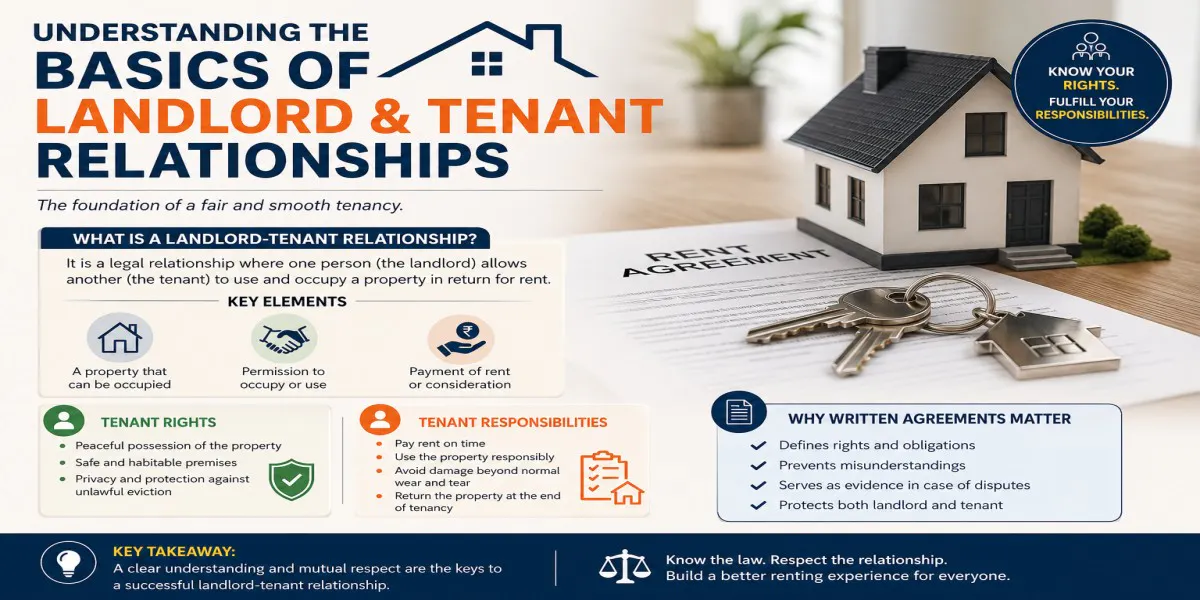
A landlord-tenant relationship is a legal relationship created when one person allows another to occupy property in return for rent.
Three basic elements are generally present:
- A property that can be occupied;
- Permission to occupy or use that property;
- Payment of rent or consideration.
Once these elements exist, a landlord-tenant relationship may arise even if the parties do not fully understand the legal consequences.
How is a Tenancy Created?
1. By a Written Agreement
The most common method is through a written rent or lease agreement.
A written agreement usually specifies:
- The names of the parties;
- Description of the property;
- Amount of rent;
- Duration of tenancy;
- Security deposit, if any;
- Rights and responsibilities of both parties.
A written agreement reduces misunderstandings and provides evidence if a dispute arises.
2. By an Oral Agreement
In many places, tenancy can also arise through an oral agreement.
For example, if a landlord allows a person to occupy a property and accepts rent from that person, a tenancy may be created even without a written document.
However, oral arrangements often lead to disagreements because important terms may not be clearly remembered by both parties.
3. By Conduct of the Parties
Sometimes a tenancy is created through the actions of the parties.
For example, if a person occupies a property with the owner's consent and regularly pays rent which is accepted by the owner, a landlord-tenant relationship may be inferred from their conduct.
Lease and Tenancy: Are They the Same?
People often use the words "lease" and "tenancy" interchangeably.
In general:
- A lease usually refers to a tenancy for a fixed period under agreed terms.
- Tenancy is a broader term that includes various forms of occupation under a landlord.
For everyday understanding, both involve a landlord giving possession of property to a tenant in return for rent.
Rights of a Tenant
A tenant is entitled to:
Peaceful Possession
The tenant has the right to use and enjoy the property without unnecessary interference.
Safe and Habitable Premises
The property should be reasonably fit for occupation and use.
Privacy
A landlord should respect the tenant's privacy and follow applicable legal requirements before entering the premises.
Protection Against Unlawful Eviction
A tenant cannot generally be removed merely because the landlord changes his or her mind. Legal procedures must usually be followed.
Responsibilities of a Tenant
A tenant is generally expected to:
- Pay rent on time;
- Use the property responsibly;
- Avoid causing damage beyond normal wear and tear;
- Follow lawful terms of the tenancy;
- Return the property when the tenancy ends.
Rights of a Landlord
A landlord generally has the right to:
- Receive rent as agreed;
- Expect reasonable care of the property;
- Inspect the property in accordance with law and the agreement;
- Recover possession of the property through lawful procedures when entitled to do so.
Responsibilities of a Landlord
A landlord is generally expected to:
- Provide possession of the property;
- Maintain essential services and facilities where required;
- Respect the tenant's lawful rights;
- Follow legal procedures for rent recovery and eviction.
Why Written Agreements Matter
Many disputes arise because parties rely solely on trust and verbal promises.
A clear written agreement helps by:
- Defining rights and obligations;
- Recording the rent amount;
- Specifying the duration of occupation;
- Clarifying maintenance responsibilities;
- Providing evidence if disagreements occur.
A written agreement protects both landlord and tenant.
Common Misconceptions
"The owner can remove a tenant at any time."
Not necessarily. Legal procedures often govern how and when a tenant may be asked to vacate.
"A tenant becomes owner after staying for many years."
Mere occupation does not automatically make a tenant the owner of the property.
"No written agreement means no tenancy."
Incorrect. A tenancy may still exist even without a written agreement, depending on the facts and applicable law.
Conclusion
The landlord-tenant relationship is one of the most common legal relationships in everyday life. At its heart, it is a simple arrangement: one person provides property for use, and the other pays rent for that use.
Understanding the basic rights and responsibilities of both parties can prevent disputes and encourage a fair and respectful relationship. Whether you are a landlord or a tenant, knowing these fundamentals is the first step toward protecting your interests and maintaining a smooth tenancy.